
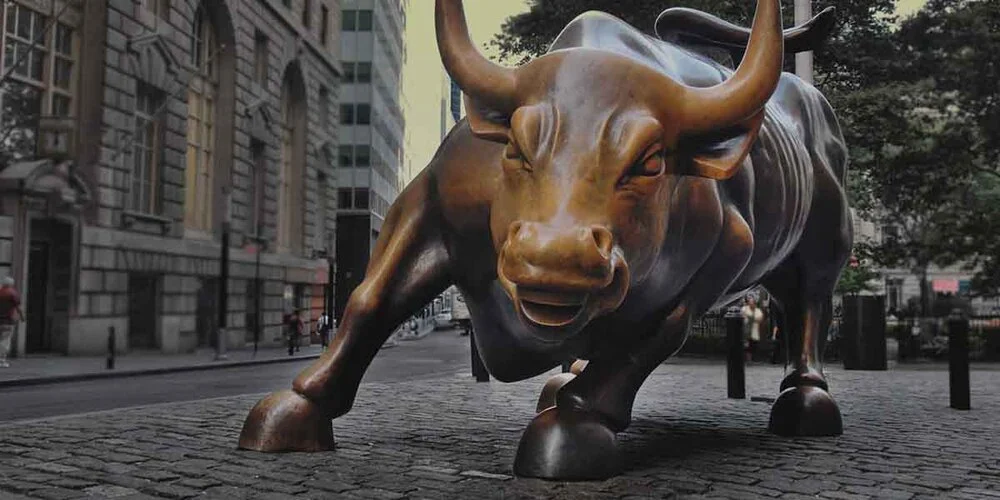
10 Investing Habits Warren Buffett Wants You to Question
- 1. Put Idle Cash to Work
- 2. Stop Letting the Market Pick Your Moment
- 3. Question Owning a Little of Everything
- 4. Stop Treating Every Price Swing as Risk
- 5. Bet on Temperament, Not IQ
- 6. Invest in Yourself First
- 7. Toss the Cookie-Cutter Allocation Chart
- 8. Quit Treating Investing Like a Casino
- 9. Stop Sorting Stocks Into "Growth" vs. "Value"
- 10. Stop Waiting for the Perfect Crash
- Wrapping Up
Which of your investing habits would make Warren Buffett wince? Here are ten he'd tell you to question — each one in plain words, with the fix.
Quick honesty note: these ideas are boiled down from things Buffett has said and written over decades, but the packaging is ours — treat it as a study guide, not gospel.
1. Put Idle Cash to Work
Cash that just sits there is like a worker on permanent break — it earns little, and inflation quietly shrinks it every year.
Buffett's view: money belongs in productive assets, and a cash pile is for hunting deals, not hiding from them.
Even Berkshire holds mountains of cash at times — but as ammunition while waiting for a fairly priced business, not as a comfort blanket.
Your emergency fund is different, by the way — that cash has a real job.
How to Do It:
- Give every dollar a role: spending, emergency fund, or invested for growth.
- Investor.gov's compound interest calculator — a free government tool that shows what parked money misses over ten or twenty years.
- Still keeping everything in the bank? Read why investing beats saving over the long haul.
2. Stop Letting the Market Pick Your Moment
Guessing where the market goes next is a coin flip, and Buffett thinks forecasts tell you more about the forecaster than the future.
His move instead: judge what a business is truly worth — its intrinsic value, meaning what a sensible buyer would pay for the whole company — and buy when the price sits below that.
If a sturdy business is cheap, he buys even when the headlines scream recession.
Utilities and everyday-goods companies are classic examples, since people keep paying the power bill in any economy.
How to Do It:
- SEC EDGAR — the government's free library of every public company's official reports.
- Read the business first and the news second; if the value is there, the calendar doesn't matter.

- Benjamin Graham's classic — Buffett calls it the best investing book ever written
- Teaches margin of safety and the famous Mr. Market parable
- Jason Zweig's commentary ties each chapter to modern markets
3. Question Owning a Little of Everything
Buffett calls wide diversification "protection against ignorance" — smart if you can't study companies, unnecessary if you can.
His fortune came from a handful of big, well-researched bets like Coca-Cola and American Express, not from 50 stocks he half understood.
But here's the flip side, straight from Buffett himself: for most everyday investors, he recommends a plain S&P 500 index fund — one big basket holding America's 500 largest companies.
So the real question isn't "how many stocks?" — it's "how well do I know what I own?"
How to Do It:
- Only concentrate in businesses you could explain to a friend in two minutes.
- Can't, or don't want to? A low-cost index fund is Buffett's own suggestion — see the common sense investing approach.
4. Stop Treating Every Price Swing as Risk
Wall Street often measures risk as volatility — how much a price bounces around.
Buffett disagrees: to him, real risk is the chance a business permanently loses its earning power, not a jumpy chart.
Case in point: after the 1980s farm crisis crushed land prices, Buffett bought a Nebraska farm in 1986 — same soil, same crops, much lower price, so less risk, not more.
A falling price on a solid business is a sale, not a siren.
How to Do It:
- Before you check the chart, ask: "Will people still buy what this company sells in ten years?"
- Judge the debts, the profits, and the products — and let the price wiggle all it wants.
5. Bet on Temperament, Not IQ
Buffett says investing success doesn't take a genius IQ — it takes a calm head and the nerve to think for yourself.
The crowd's mood is a terrible guide: investors chased hot tech stocks right up until the dot-com bubble burst in 2000.
The calm ones who refused to chase kept their money.
You don't need to follow the crowd or fight it — just ignore it and stick to facts.
How to Do It:
- Write down why you bought before you buy, and re-read it before you sell.
- If a stock only excites you because "everyone's buying," that's your warning bell.
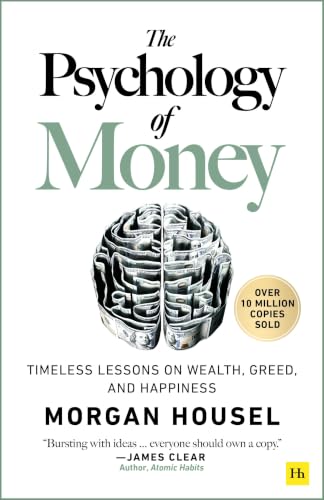
- 19 short stories on how emotions, ego, and luck drive money decisions
- Shows why staying wealthy is a different skill than getting wealthy
- The rare finance book about behavior, not formulas
6. Invest in Yourself First
Buffett's favorite investment isn't a stock — it's you, and he singles out communication skills as the biggest booster.
As a young man terrified of public speaking, he took a Dale Carnegie course, and he still credits it with changing his career.
Better speaking and writing make every idea you have worth more, in any job.
How to Do It:
- Toastmasters — a nonprofit with local clubs where you practice public speaking on the cheap.
- Dale Carnegie Training — the modern version of the exact course Buffett took.
7. Toss the Cookie-Cutter Allocation Chart
Preset formulas like "60% stocks, 40% bonds" are one-size-fits-all pants — tidy, but a perfect fit for nobody.
Buffett's approach: park spare cash in safe short-term stuff, then move it into great businesses whenever one shows up at a fair price.
The pie chart doesn't decide — the opportunity does.
To be fair, plenty of pros still like fixed mixes for hands-off investors, so this one's about questioning autopilot, not banning bonds.
How to Do It:
- Ask why every holding is there; "the chart said so" isn't a reason.
- Rebalance around opportunities you understand, not around a magazine formula.

- Lays out the low-cost index-fund strategy behind the FIRE movement
- Explains why avoiding debt and buying the whole market beats stock picking
- Written as letters to the author's daughter — plain answers, no jargon
8. Quit Treating Investing Like a Casino
Day trading — buying and selling within hours — is closer to betting than investing, and Buffett wants no part of it.
Fast trades rack up real costs: quick gains get taxed at your full income rate, and tiny price gaps nibble at you on every trade.
The meme-stock frenzy proved it — plenty of late-arriving traders rode prices up and straight back down.
Patient owners of good businesses barely noticed.
How to Do It:
- Think in years, not hours; buy businesses, not tickers.
- Tempted anyway? Sleep on every trade for a week and see if you still want it.
9. Stop Sorting Stocks Into "Growth" vs. "Value"
Wall Street loves splitting stocks into growth (fast and pricey) and value (slow and cheap) — Buffett calls that a false divide.
In his words, growth is simply one ingredient in figuring out what a business is worth.
Growth only helps when it creates more cash than it eats.
Airlines grew for decades while devouring capital and rewarding owners poorly; See's Candies grew gently while needing almost nothing — and made Berkshire a fortune.
How to Do It:
- Ask what the growth costs: does expansion pay for itself, or swallow every spare dollar?
- Skip the label; estimate what the whole business is worth and compare that to the price.
10. Stop Waiting for the Perfect Crash
Sitting out for years waiting for the big correction is its own bet — and it usually loses.
Buffett's advice from 2008 says it best: "If you wait for the robins, spring will be over."
His playbook is simpler: when a quality business trades at a reasonable price, buy it, whatever the index did today.
Good entry points show up in every kind of market — you just have to be looking at businesses instead of the calendar.
How to Do It:
- Keep a wish list of great companies with the price you'd happily pay for each.
- When one hits your price, act — even if the market "feels high."
Wrapping Up
Buffett's list isn't a rulebook — it's a mirror you hold up to your own habits once in a while.
Ready to check real numbers instead of habits? Our Buffett-style income statement checks show exactly where to look.
And remember: these are ideas to learn from, not personal instructions or individualized financial advice.
Investing Mistakes, Part One: Read the Market First
Stay Calm, Demand a Margin of Safety