

Stay Calm, Demand a Margin of Safety
Ever feel like the market's gone crazy and you're the only one not in on the joke? Benjamin Graham wrote the calm-down manual back in 1949 — it's called The Intelligent Investor, and its rules still work today.
Graham taught a young Warren Buffett at Columbia, and Buffett still calls this book "by far the best book on investing ever written."
Quite a reference letter. Here are its seven big rules.
1. Demand a Margin of Safety
A margin of safety means paying clearly less than a business is worth, so a mistake won't wipe you out.
It's the guardrail on the mountain road: you hope you never need it, but you never drive without it.
A modern example: in late 2022, Meta's stock crashed to roughly $90 during the panic over its expensive metaverse bet.
But Facebook, Instagram, and WhatsApp were still earning huge profits, and patient buyers got all that for a bargain price.
Within two years the stock traded more than five times higher. That's the cushion doing its job!
How to Do It:
- Estimate what the business is worth first, then only buy well below that number — never the other way around.
- Buffett's shareholder letters — free lessons from Graham's star pupil on buying dollars for fifty cents.
2. Figure Out What the Business Is Really Worth
Graham called a company's true worth its intrinsic value — what you'd pay for the whole business based on the cash it earns, not on today's stock quote.
A jeweler judges a diamond by the stone, not the fancy storefront lighting.
Same idea: judge Apple by its profits, loyal customers, and room to grow — not by today's ticker color.
When you know what something's worth, a scary headline can't shake you loose.
How to Do It:
- Read the company's own annual report on SEC EDGAR — the government's free filing library.
- Start with our guide to telling a bargain from a trap, which walks through the basic value checks.

- Benjamin Graham's classic — Buffett calls it the best investing book ever written
- Teaches margin of safety and the famous Mr. Market parable
- Jason Zweig's commentary ties each chapter to modern markets
3. Meet Mr. Market — and Ignore His Moods
Graham's most famous idea is a character called Mr. Market: an imaginary business partner who shows up every day offering to buy your shares or sell you his.
One day he's giddy and quotes silly-high prices; the next he's gloomy and practically gives shares away.
You're free to ignore him for months — he never takes it personally — then pounce the one day his mood hands you a deal.
The market is there to serve you, not to instruct you.
How to Do It:
- Before selling in a panic, ask one question: did the business change, or just the price?
- Keep a written note of why you bought each stock — reread it before you react to any headline.
4. Play Defense First
Graham split investors into two types: defensive investors, who want safety and simplicity, and enterprising investors, who treat stock research like a part-time job.
Most people are defensive investors — and that's not an insult, it's a strategy.
The defensive playbook favors steady dividend payers — think Johnson & Johnson or Coca-Cola, which have raised their dividends for more than 60 straight years — plus broad index funds that own the whole market.
Boring? Maybe — but boring pays the bills.
How to Do It:
- Be honest about your hours: if you won't study companies weekly, use the defensive playbook.
- Our guide to Jack Bogle's simple index approach is the modern version of Graham's defensive plan.
5. Refuse to Gamble
Graham drew a hard line between investing — careful study with protected downside — and speculation, which is betting on prices going up because everyone's excited.
The GameStop meme frenzy of 2021 was speculation in its Sunday best.
A few gamblers got rich, and a crowd of latecomers paid for it.
If you can't explain why the business itself will make money, you're not investing — you're buying a lottery ticket with extra steps.
How to Check Yourself:
- Write your reason for buying in one sentence; if it mentions "everyone says" or "it's going up," walk away.
- Keep any fun-money bets small enough that losing 100% wouldn't change your life.
6. Spread Your Bets
Even great judgment fails sometimes, so Graham insisted on diversification — owning enough different things that one disaster can't sink you.
A mix like Microsoft, Procter & Gamble, and some steady bonds is a table with many legs: kick one out, and it still stands.
When tech stumbles, toothpaste and bond interest often hold the line — and vice versa.
How to Do It:
- Spread stock money across several sectors, and hold some bonds or cash alongside.
- One broad, low-cost index fund gives you instant diversification in a single purchase.
7. Train Your Temper, Then Think in Decades
Graham's deepest lesson isn't about numbers — it's that your own behavior is the biggest risk you carry.
Investors who kept their heads through the 2020 crash watched quality holdings recover, then grow.
The discipline part is simple to say and hard to do: act on logic, not headlines, and give good businesses five, ten, or twenty years to prove out.
Look at the horizon, not the next street corner.
How to Do It:
- Automate your investing on a schedule, so your calm past self outvotes your panicked future self.
- Check your portfolio monthly, not hourly. Seriously, delete the widget!
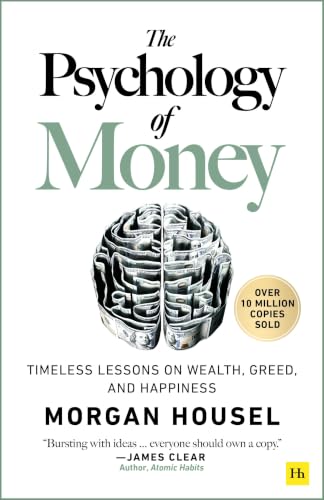
- 19 short stories on how emotions, ego, and luck drive money decisions
- Shows why staying wealthy is a different skill than getting wealthy
- The rare finance book about behavior, not formulas
Wrapping Up
Graham's whole book boils down to this: buy things for less than they're worth, and don't let a moody market talk you out of it.
Think of his rules as a seatbelt — they won't make the road smooth, but they'll get you through the potholes.
These are ideas to chew on, not personal instructions or individualized financial advice — your money, your call.
The Numbers Talk. Benjamin Graham Teaches You to Listen
Peter Lynch’s Edge Is Hiding in Plain Sight