

The Numbers Talk. Benjamin Graham Teaches You to Listen
Ever open a company's financial report and feel like it's written in a secret code? Benjamin Graham — the father of value investing — left us a simple way to crack it, and you don't need an accounting degree to use it.
A tweet can move a stock in seconds, but the numbers tell you whether the business behind it is actually healthy.
Graham's method boils down to reading three documents together: the balance sheet, the income statement, and the cash flow statement.
Let's take them one at a time.
1. Start With the Balance Sheet
The balance sheet is a snapshot of what a company owns and what it owes on a single day.
Think of it as the company's version of your own net worth: house and savings on one side, mortgage and credit cards on the other.
First, check liquidity — whether the stuff it can turn into cash quickly (called current assets) comfortably covers the bills due within a year (current liabilities).
Graham liked to see current assets at least twice as big as current liabilities.
A company that clears that bar can survive a storm; one drowning in short-term IOUs is a ship without lifeboats.
How to Check It:
- SEC EDGAR — the government's free library of every company's official reports; search any ticker.
- StockAnalysis.com — shows the balance sheet in a clean table, with current assets and liabilities labeled.
2. Weigh the Debt Load
Next, look at long-term debt — the big loans due years from now.
Graham preached caution here: a heavily indebted company can soar in good times, but when business slows, lenders knock louder than customers.
A manageable debt load, or debt that shrinks year after year, is a quiet signal of a careful management team.
Flashy is fun; prudent gets you through recessions.
How to Check It:
- Compare long-term debt to total equity on the balance sheet — a pile of debt bigger than the owners' stake deserves hard questions.
- Check whether the debt number is rising or falling across the last few annual reports.
3. Read the Income Statement Like a Movie, Not a Photo
The income statement shows what the company earned and spent over a stretch of time.
One blockbuster quarter is just a single frame — Graham wanted the whole film.
Is revenue growing steadily over several years, or seesawing between spikes and plunges?
Steady, even modest, beats flashy: a retailer like Costco rarely thrills day traders, but its consistent earnings and tight cost control are exactly what long-term investors want.
Watch profit margins too — if the share of each sales dollar kept as profit shrinks year after year, the company may be losing its edge.
And note what management does with the profits: reinvesting in the business, careful expansion, or a modest dividend all show respect for your money, while overpriced trophy acquisitions usually don't.
How to Check It:
- Pull up five to ten years of revenue and margins at once on StockAnalysis.com or your broker's research tab.
- Our guide to the ratios Warren Buffett uses turns these numbers into quick pass-fail tests.
4. Trust the Cash Flow Statement Most
Here's the part beginners skip — and pros read first.
Reported earnings can be dressed up with accounting adjustments, but cash is hard to fake.
The cash flow statement tracks the actual dollars moving in and out, and the star number is free cash flow: what's left after paying the bills and maintaining the business.
A company that generates more cash than it burns, year after year, is planting seeds for its future — Microsoft, for example, throws off tens of billions of dollars in free cash every year to fund new bets, buybacks, and rainy-day reserves.
Paper profits impress; real cash endures.
How to Check It:
- Find "free cash flow" on the cash flow tab of StockAnalysis.com — positive and growing is the pattern you want.
- Compare free cash flow to reported earnings; if profits look great but cash keeps shrinking, believe the cash.

- 130+ functions cover loan payments, bond prices, depreciation, NPV, and IRR
- Switch between classic RPN and algebraic entry — with an undo key
- Stores 30 cash flows and is approved for finance certification exams
5. Get Suspicious When It Gets Complicated
Graham's last lesson is pure attitude: skepticism.
When a company needs pages of obscure footnotes or invents its own fancy profit measures to look good, treat that as a warning light.
Businesses that bury bad news in fine print usually have bad news to bury.
Stick to the standard yardsticks — the official accounting rules known as GAAP — as your baseline, and be wary of "adjusted" numbers that always adjust upward. Funny how that works!
Complexity can be a costume; simplicity is usually a sign of integrity.
How to Check It:
- Read the footnotes of the annual report on EDGAR — that's where the skeletons live.
- If the company's homemade metrics look far rosier than its GAAP numbers, ask why.
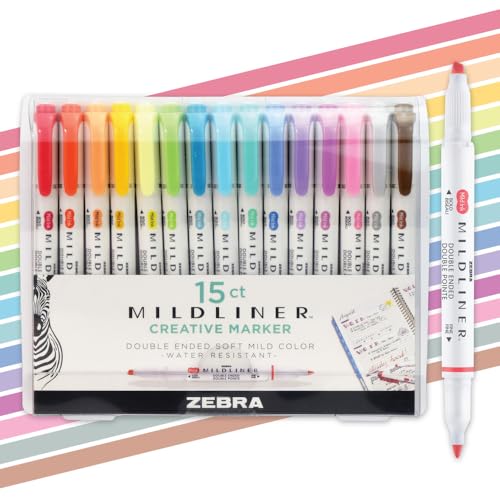
- Dual chisel and fine tips highlight whole lines or single figures
- Soft translucent ink won't bleed through thin report pages
- 15 layerable colors for color-coding statements and study notes
Wrapping Up
Financial statements are a company's report card, diary, and bank statement rolled into one — read all three pages and the character shows through.
Balance sheet for safety, income statement for consistency, cash flow for truth.
These are ideas to practice with, not personal instructions or individualized financial advice — your money, your call.
Stay Calm, Demand a Margin of Safety
Five Minutes, One Stock, No Guesswork