

The Investment Menu Is Bigger Than Stocks and Bonds
- 1. Own a Piece of a Company With Stocks
- 2. Lend Your Money Out With Bonds
- 3. Keep It Simple With Bank Products
- 4. Pool Your Money in Mutual Funds
- 5. Trade the Whole Basket at Once With ETFs
- 6. Collect Rent (or Skip the Landlording) With Real Estate
- 7. Dabble Carefully in Commodities
- 8. Know the Big-Ticket and New-Frontier Options
- 9. Match the Bucket to Your Risk Style and Timeline
- Wrapping Up
Stocks, bonds, funds, real estate, gold — how are you supposed to know which types of investments even exist, let alone which fit you? Relax: the whole menu boils down to nine buckets, and we'll walk them one at a time.
Quick map before we start: an investment is anything you buy because you expect it to grow or pay you.
If you want the full beginner picture first, our guide to what investing is starts from zero.
1. Own a Piece of a Company With Stocks
A stock — also called an equity security — is a small slice of ownership in a company.
Companies sell shares to raise money, and you buy them hoping the business grows and your slice becomes worth more.
Wall Street calls tradable investments like these "securities" — any financial asset you can buy and sell in a market.
Why care? Stocks are the growth engine of most portfolios, and over long stretches they've historically beaten every bucket below.
How to Find It:
- Any major brokerage app — search a company's name and you'll see its ticker, price, and history.
- Investor.gov's stocks page — the SEC's plain-English rundown of how shares work.

- Benjamin Graham's classic — Buffett calls it the best investing book ever written
- Teaches margin of safety and the famous Mr. Market parable
- Jason Zweig's commentary ties each chapter to modern markets
2. Lend Your Money Out With Bonds
A bond — a debt security — flips the deal: instead of owning, you're lending.
The company or government that sells you the bond promises to pay your money back with interest.
Bonds usually bounce around less than stocks, which is why careful savers like them.
One oddball worth knowing: hybrid securities, like convertible bonds, start life as a bond but can be swapped for stock later under rules set on day one.
How to Find It:
- TreasuryDirect — buy US government bonds straight from the source, no middleman.
- Our stocks vs. bonds guide — a side-by-side look at owning versus lending.
3. Keep It Simple With Bank Products
Banks sell the calmest investments on the menu, and your deposits are protected by FDIC insurance — a government safety net covering up to $250,000 per person, per bank.
A savings account earns a little interest, and some checking accounts do too if you keep enough in them.
A money market account works like an interest-bearing checking account and usually pays a bit more, though it may ask for a higher minimum balance.
A certificate of deposit (CD) locks your money up for a set term — often three months to five years — in exchange for a fixed, usually higher rate.
Two catches on CDs: pull out early and you'll likely pay a penalty, and most CDs take one deposit up front — only special "add-on" CDs let you keep contributing.
Fun fact: the bank invests your deposits for its own profit and pays you a sliver — that's the trade for all that safety.
How to Find It:
- The FDIC's national rates page — the official monthly scoreboard of average savings, money market, and CD rates.
- Your own bank's app — compare its CD and money market offers against that scoreboard before you commit.
4. Pool Your Money in Mutual Funds
A mutual fund is a big basket of stocks or bonds that thousands of people buy into together, run by a professional manager.
One purchase spreads your money across dozens or hundreds of companies — instant diversification.
An index fund is the low-cost version: instead of a manager picking stocks, it just copies a market list like the S&P 500, America's 500 biggest companies.
Mutual funds have one quirk: they're priced only once a day, after the market closes.
How to Find It:
- FINRA's Fund Analyzer — a free regulator tool that compares funds and shows what fees really cost you.
- Any large fund company or broker — search by the fund's five-letter ticker to see holdings and fees.
5. Trade the Whole Basket at Once With ETFs
An exchange-traded fund (ETF) is also a basket of investments — but it trades on the stock exchange all day long, like a single stock.
That's the big difference from mutual funds: ETF prices move minute by minute, while a mutual fund gets one price at day's end.
Most ETFs simply track an index, though a growing number are actively managed by stock pickers.
Why care? ETFs combine a fund's diversification with a stock's flexibility, usually at very low cost — which is why they've become a favorite for new investors.
How to Find It:
- Investor.gov's fund guide — the SEC's side-by-side on mutual funds and ETFs.
- The story of how ETFs went from odd idea to portfolio staple — our short history of the product.
6. Collect Rent (or Skip the Landlording) With Real Estate
Real estate is the classic tangible investment — an asset you can physically touch.
The direct route: buy a house or commercial building and collect monthly rent, along with every 2 a.m. repair call.
The hands-off route: a real estate investment trust (REIT), a fund that owns many properties and pays you a share of the rent — no toilets involved.
Newer crowdfunding platforms pool many smaller investors into big development projects, with lower minimums but less ability to cash out early, so read the fine print.
How to Find It:
- Investor.gov's REIT page — how these trusts work and what to watch for.
- Many REITs trade on the stock exchange, so your regular brokerage app can find them by ticker.
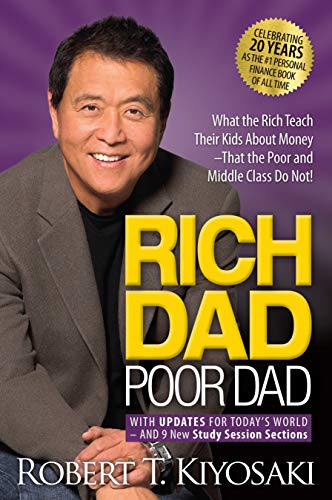
- Challenges the earn-and-spend script with lessons from two very different dads
- Explains assets versus liabilities in terms a teenager can repeat
- The mindset book that pushed millions to make money work for them
7. Dabble Carefully in Commodities
Commodities are raw goods the world runs on: crops like corn, wheat, and soybeans, metals like gold and silver, and energy like oil and natural gas.
Their prices swing on weather, wars, and politics — things nobody can predict.
They can add variety to a portfolio, and some people lean on them when prices everywhere are rising — here's where money can hide when inflation runs hot.
But keep the helping small: commodities are a side dish, never the whole meal!
How to Find It:
- The CFTC's education page — basics and scam warnings from the government's commodities regulator.
- Most people skip futures contracts and use commodity ETFs instead — searchable in any brokerage app.
8. Know the Big-Ticket and New-Frontier Options
Private capital means backing companies that aren't on the stock market — think startups raising money for equipment, space, and staff.
It usually takes deep pockets and long waits, so it's rarely a beginner's first stop, though some crowdfunding sites now pool smaller checks.
Then there's crypto — digital coins like Bitcoin that trade around the clock with wild price swings.
It's a real bucket on today's menu, but read our ten reasons to pause before buying crypto before you put in a dollar you'd miss.
How to Find It:
- Investor.gov's investor bulletins — the SEC's warnings and explainers on private deals, crowdfunding, and crypto.
9. Match the Bucket to Your Risk Style and Timeline
Investors come in three broad flavors, and knowing yours matters more than any hot tip.
Risk-averse investors lose sleep over dips — often because retirement is close, income feels shaky, or a past loss still stings.
Risk-tolerant investors accept normal market wobbles in exchange for better long-run returns.
Risk-seekers chase big swings on purpose — usually folks with years of runway and savings to spare.
Your timeline seals the deal: money you'll need within about three years belongs in calm spots like bank products and short-term bonds, while money you won't touch for many years can ride in stocks, funds, and real estate.
One smart trick: run separate accounts for separate goals — a house fund and a retirement fund shouldn't hold the same investments.
How to Do It:
- Investor.gov's asset allocation guide — the SEC's plain-English take on matching your mix to your risk style and timeline.
- A robo-advisor or a broker's questionnaire can suggest a mix — here's how to choose between a robo-advisor and a discount broker.

- Practice investing, real estate, and passive-income decisions with play money
- Built by the Rich Dad team to drill cash-flow thinking
- For 2-6 players ages 14 and up, refreshed with modern money concepts
Wrapping Up
Think of investing like a buffet: nine buckets on the table, and a good plate takes a little from several — not a mountain of one.
These are ideas to explore, not personal instructions or individualized financial advice.
Stocks or Bonds? Know What You Are Really Buying

10 Ways to Put Your Money to Work for the Long Run