
Crypto Looks Exciting. Here Are 10 Reasons to Pause
- 1. Brace for Wild Price Swings
- 2. Expect a Crash Every Few Years
- 3. Check What's Backing Your Coin
- 4. Watch the Rulebook Being Written Mid-Game
- 5. Try Spending It at the Store
- 6. Understand the Mining Clock
- 7. Guard Your Keys Like a Vault Code
- 8. Count On a Thin Safety Net
- 9. Know Who Else Loves Crypto
- 10. Accept That Nobody Promises a Payoff
- Wrapping Up
Your buddy won't stop talking about his crypto wins, and now you're wondering if you should buy in too — but should you? Here are ten honest reasons to pause first, with no fancy talk, just plain answers.
Quick translation before we start: cryptocurrency is computer money — digital coins, like Bitcoin, that live on a blockchain.
A blockchain is just a shared notebook that thousands of computers keep in sync, so no bank or government runs it.
That's the whole sales pitch: fans say it's secure, it's outside anyone's control, and it can be cheap to send — though fees jump when the network gets busy.
One myth to clear up: crypto isn't really anonymous.
Most big exchanges — the online stores where you buy coins — check your ID, and every payment sits in that public notebook forever.
Plenty of smart people still aren't sold. Here's why.
1. Brace for Wild Price Swings
"Volatility" is a fancy word for prices that bounce around hard and fast.
Crypto might be the bounciest thing you can buy: Bitcoin hit about $69,000 in November 2021, fell under $16,000 a year later, then climbed to about $126,000 by October 2025.
Why care? Because a drop like 2022's cut people's savings by more than three-quarters, and most folks don't ride that out — they panic and sell at the bottom.
If losing half your money for a year or two would wreck your sleep or your rent, that's your answer right there.
How to Check It:
- CoinGecko's Bitcoin page — a free price tracker; tap "Max" on the chart and look at those cliffs.
- CoinMarketCap — the other big price scoreboard, covering thousands of coins.
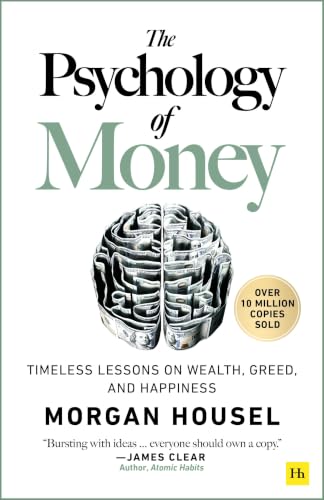
- 19 short stories on how emotions, ego, and luck drive money decisions
- Shows why staying wealthy is a different skill than getting wealthy
- The rare finance book about behavior, not formulas
2. Expect a Crash Every Few Years
A bear market is a long stretch where prices keep falling — and bitcoin has hit a brutal one roughly every three or four years.
It happened in 2011, 2014, 2018, and 2022, with drops of 70% or more each time. Yep, every time!
Right on schedule, the latest slide arrived in early 2026, when bitcoin lost roughly half its value from that October 2025 peak.
That's a pattern, not a law of nature — but history says you should walk in expecting at least one gut-punch crash.
How to Check It:
- The same CoinGecko chart, zoomed all the way out — every past crash shows up as a mountain with a cliff on the right side.
- CoinMarketCap's bitcoin history page — day-by-day prices, so you can see exactly what each crash did.
3. Check What's Backing Your Coin
A dollar is backed by the US government, and money in your bank is covered by FDIC insurance — a government safety net that repays you up to $250,000 if the bank fails.
Most crypto is backed by exactly nothing except the hope that people keep wanting it.
If buyers walk away, no government, no company, and no pile of gold stands behind your coins.
Stablecoins — coins tied to the dollar — are the one corner with something behind them, and we'll get to their new rules next.
Why care? Because "worth whatever the crowd says" cuts both ways, and fast.
How to Check It:
- The FDIC's deposit insurance page — what the government actually protects; crypto isn't on the list.
- Investor.gov's crypto page — plain-English warnings from the SEC, the government's market watchdog.

- An NPR Planet Money host tells how money was invented — and reinvented
- From goldsmiths' receipts to central banks to crypto, minus the textbook tone
- Short, funny chapters that make monetary history stick
4. Watch the Rulebook Being Written Mid-Game
Regulation just means the government's rules for a market — and crypto's rules are still being written while you play.
The US got its first big federal crypto law in July 2025: the GENIUS Act, which makes stablecoin issuers hold one real dollar for every dollar-coin they create.
But the bigger rulebook for the rest of crypto — the CLARITY Act — was still stuck in the Senate as of late summer 2026.
Other countries swing harder: China banned crypto trading and mining in 2021, and El Salvador, the first country to make bitcoin official money, walked most of that back in 2025 to land an IMF loan.
Why care? One new rule in any big country can move prices overnight, and your legal protections are far thinner than with stocks.
The tax rules are already real, though: the IRS treats crypto as property, so selling it — or even spending it — can trigger a tax bill.
How to Check It:
- The GENIUS Act on GovTrack — the bill tracker's page on the stablecoin law, with its full text and history.
- The IRS digital assets page — the official word on when crypto triggers taxes.
5. Try Spending It at the Store
Money has one main job: buying stuff. Crypto is still bad at it.
A handful of big brands and some small shops take it — often through a middleman like BitPay that instantly flips the coins into dollars — but try paying for groceries or rent with bitcoin.
Even in El Salvador, where bitcoin spent three years as official money, most people stuck with dollars.
Why care? If you can't spend it, you're not holding money — you're holding a bet that someone will buy it from you later.
How to Check It:
- BTC Map — a community-run world map of shops that accept bitcoin; see how sparse your town looks.
- BitPay's merchant directory — lists the brands that take crypto through its payment service.
6. Understand the Mining Clock
New bitcoins come from mining: computers race to solve a puzzle, and the winner gets freshly minted coins.
The supply is capped at 21 million, more than 19 million are already out, and the prize gets cut in half about every four years — the April 2024 "halving" dropped it to 3.125 bitcoin per win.
So mining keeps getting harder and less rewarding, and the long-term plan is for network fees to pay the miners instead. Nobody knows if that handoff will work.
Meanwhile, all that puzzle-solving burns country-sized amounts of electricity every year.
Why care? You'd be buying into a machine whose engine gets redesigned every four years, with its hardest test still ahead.
How to Check It:
- The Cambridge Bitcoin Electricity Consumption Index — a live university estimate of mining's power use, with country comparisons.
- Blockchain.com's hash rate chart — shows the mining arms race climbing year after year.

- Traces money from seashells to gold to explain what makes a currency hard
- Makes the economic case for Bitcoin as digital sound money — and its limits
- Gives crypto-curious readers the history before the hype
7. Guard Your Keys Like a Vault Code
Your crypto lives behind a private key — a master password that basically is the money.
Keep it on your phone or laptop and malware can grab it, and there's no undo button, because crypto payments can't be reversed like a credit card charge.
Hackers go where the coins are.
The old Mt. Gox exchange lost about 850,000 bitcoins in 2014, and in February 2025 thieves took about $1.5 billion from the exchange Bybit — the biggest crypto heist ever, which the FBI pinned on North Korean hackers.
Even a blockchain itself isn't bulletproof: smaller coins have been hit by 51% attacks, where one group grabs control of the shared notebook.
Serious holders move their keys offline into a hardware wallet — think tiny USB vault — but then you're the bank, and losing the key means losing the coins forever.
How to Protect Yourself:
- The FTC's crypto scam guide — the government's checklist of the tricks thieves use.
- If you hold coins anyway, keep them off exchanges and off your phone — offline "cold storage" is the standard advice.

- Manages thousands of coins including Bitcoin, Ethereum, and Solana
- Private keys stay offline in a chip battle-tested by white-hat hackers
- Buy, swap, and stake through the all-in-one Ledger app via USB-C
8. Count On a Thin Safety Net
If your bank fails, the FDIC repays you up to $250,000; if your stockbroker fails, SIPC protection covers up to $500,000.
If your crypto exchange fails, you get in line at bankruptcy court.
That's what customers of the FTX exchange learned in 2022, when it collapsed with a roughly $8 billion hole and people waited years for repayment.
The scam side is just as ugly: the FBI logged $9.3 billion in reported crypto fraud losses in 2024 alone — up 66% in one year. Yep, billion with a B!
Why care? In crypto, "oops" is usually permanent.
How to Check It:
- SIPC's protection page — spells out what's covered at a brokerage; crypto generally isn't.
- IC3.gov — the FBI's internet crime center, where scams get reported and the yearly damage reports live.
9. Know Who Else Loves Crypto
Payments that can't be reversed and don't carry your name are handy — especially if you're a criminal.
Ransomware gangs demand crypto, and scammers lean on it for the same reason.
To be fair, the tracking firm Chainalysis figures illegal activity is well under 1% of all crypto activity — but that small slice still adds up to tens of billions of dollars a year.
Why care? Stolen or "tainted" coins can get frozen or seized as they pass through exchanges, and every crime headline invites the kind of crackdown that moves prices.
How to Check It:
- Chainalysis — the blockchain-tracking firm whose yearly Crypto Crime Report tallies the illegal slice.
10. Accept That Nobody Promises a Payoff
A stock can pay you dividends — a slice of company profits — and a bond pays you interest. Crypto pays you nothing for holding it.
Your only way to profit is selling to someone who'll pay more, which critics call the greater fool theory — a game of hot potato that works until it doesn't.
That's Warren Buffett's whole objection: the coins don't produce anything while you wait.
Wall Street has warmed up anyway — since January 2024, giants like BlackRock and Fidelity have offered bitcoin ETFs, funds you buy like a stock. But popularity still isn't a promise.
And coins really do die: the Terra/Luna collapse erased around $40 billion in a single week in May 2022.
How to Compare:
- Stocks or bonds? — our plain guide to assets that actually pay you while you hold them.
- What dividends are — how companies share real profits with shareholders.
Wrapping Up
Crypto is a carnival ride that's still being built while you're on it — thrilling, but nobody's inspected all the bolts.
If you still want a seat after all ten reasons, keep the bet small, guard your keys, talk it over with a real financial advisor first, and remember your money has plenty of calmer places to work.
These are ideas to chew on, not personal instructions or individualized financial advice — your money, your call.
How to Invest in Crypto Without Losing Your Head
Crypto Without the Hype