Checks Crossed the Silk Road Before Reaching Your Wallet
- 1. Trace the First Checks to the Ancient World
- 2. Follow the čak Down the Silk Road
- 3. Watch the Modern Check Take Shape in Amsterdam
- 4. See England Make Checks Secure
- 5. Bring Checks to America
- 6. Automate the Whole System
- 7. Watch the Check Begin Its Long Goodbye
- 8. Marvel at the Record-Book Checks
- Wrapping Up
Would you believe the humble paper check is older than most alphabets' final forms — with roots stretching back more than two thousand years? Here's the long, strange trip from ancient India to your junk drawer.
1. Trace the First Checks to the Ancient World
Evidence of check-like instruments goes back to around 300 BC in India's Maurya Empire.
Their version was called the adesha: a written order telling a banker to move money from your account to someone else.
By around 100 BC, the Romans were running a similar system of written payment orders.
Same idea as today — paper standing in for coins.
How to See It:
- Notice the three parts every era shares: an amount, a payee, and an instruction to the money-holder — that's a check, in any century.
2. Follow the čak Down the Silk Road
Checks hit their stride in the 400s AD, when the Silk Road's booming trade made hauling cash a robbery invitation.
Traders in Persia's Sassanid Empire started carrying the čak — a letter of credit that traveled safer than silver.
By the 9th century, a čak drawn on a bank in one country could be cashed in another.
Similar systems popped up from the Ghana Empire in Africa to Venice — wherever trade wealth traveled, paper followed.
How to See It:
- Follow the money and the merchants together: every big trade route in history grew its own cash substitute.
3. Watch the Modern Check Take Shape in Amsterdam
Historians point to the early 1500s in Amsterdam for the closest ancestor of today's check.
Dutch merchants, tired of guarding piles of gold and silver, paid "cashiers" to store money securely.
Cashiers soon offered a killer feature: paying a depositor's debts on written orders listing the amount, the payee, and the purpose.
Sound familiar? That's your checkbook, wearing a ruff collar.
How to See It:
- Those cashiers were early banks in all but name — the full story's in our history of banking.
4. See England Make Checks Secure
England adopted the idea — and so did England's scammers.
The Bank of England's 1717 fix changed everything: pre-printed "cheque paper" with serial numbers, filled out in front of a banker.
The name stuck — the bank could now "check" the serial numbers against its records to catch fraud.
Then in about 1770, London's exhausted bankers — who trudged bank to bank daily settling balances — started meeting at a pub to square up over drinks.
That daily happy hour became the world's first banker's clearing house, ancestor of today's global check-processing system!
How to See It:
- Next time a check clears in a day, thank a serial number and a pub table.
5. Bring Checks to America
In 1784, Alexander Hamilton founded the Bank of New York, which promptly issued its first checks.
A Bank of New York checkbook from 1796, discovered in New Jersey in 2014, shows how little has changed: pre-printed fields, spaces for amount and payee.
Just don't expect to find one made out to Hamilton himself.
6. Automate the Whole System
Starting in 1959, checks got printed with standardized machine-readable characters — those blocky numbers along the bottom.
Machines could suddenly sort and clear checks in bulk, and check use exploded.
The first check-reading computers were monsters: over a million feet of wiring, 25 tons of machine, 80 kilowatts of hunger.
Your phone now does the same job by photographing the check. Progress!
How to See It:
- Flip over any check: that machine-readable number line is the 1959 invention, still on duty.
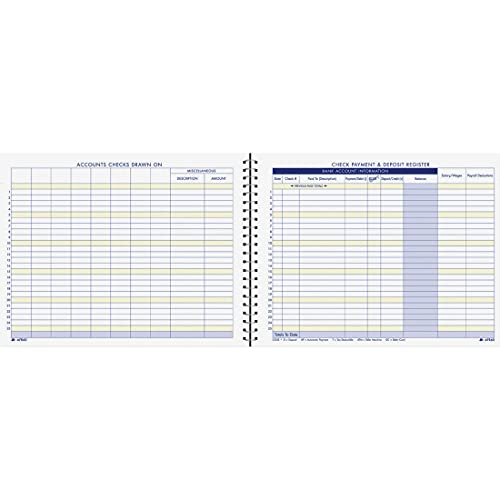
- Room for over 1,100 transactions to verify balances and catch bank errors
- Spiral binding opens flat for margin-to-margin writing
- Soft page colors and wide rows keep long sessions easy on the eyes
7. Watch the Check Begin Its Long Goodbye
American check-writing peaked in 1992, when over 19 billion checks moved through the system.
By 2020, the Federal Reserve was collecting only about 3.7 billion a year — though the dollars riding on them still run into the trillions.
Cards, apps, and transfers took the crown, but checks refuse to die completely — rent, contractors, and grandma still swear by them.
How to See It:
- The Fed publishes the yearly numbers at the link above — the world's slowest-motion farewell.
8. Marvel at the Record-Book Checks
The biggest check ever written saved a Wall Street giant: in 2008, Japan's Mitsubishi UFJ handed Morgan Stanley a physical $9 billion check for a 21% stake — wire transfers were too slow for the emergency.
Morgan Stanley survived, and that stake has grown to be worth tens of billions.
And yes — those giant novelty checks from lottery wins are technically cashable if every required detail is on them, though banks vastly prefer the machine-size version.
Most winners get a normal-sized twin check for exactly that reason — nobody wants to process the 82-by-39-foot monster displayed in Kuwait in 2007.
How to See It:
- Win big someday? Ask for the little check — it clears faster.
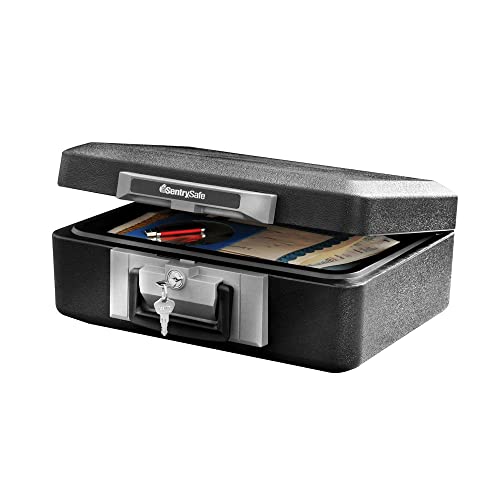
- UL classified to survive half an hour at 1,550°F
- Privacy key lock keeps the lid shut even through a fire
- Compact chest with carry grips and a lifetime after-fire replacement guarantee
Wrapping Up
The check is a 2,000-year-old text message: paper carrying a promise from one vault to another, rewritten by every civilization that touched it.
From Clay Tablets to Bitcoin, Banking Never Stood Still

How ETFs Went From Odd Idea to Portfolio Staple